📝 Beginner Guide — Build a Blog That Earns With AI
An affiliate blog is one of the most sustainable ways to build online income — and AI tools have made starting one more accessible than ever for complete beginners.
This guide covers exactly how to start an AI affiliate blog — from choosing your niche to writing content with AI to joining affiliate programs — with honest timelines and free tools for every step.
An affiliate blog works on a straightforward principle — you write helpful content, readers find it through Google, they click your affiliate links, and you earn a commission when they sign up or purchase. AI tools speed up the content creation part significantly, making it more manageable for beginners to build and maintain a blog consistently.
This is not a get-rich-quick method. An AI affiliate blog requires consistent effort over several months before generating meaningful income. But once it gains traction, it can continue earning with relatively low daily maintenance — which is why many beginners find it worth the initial investment of time and effort.
New to AI tools? Read our Start Here guide first. Then use our free AI Side Hustle Generator to confirm that affiliate blogging matches your goals and available time before starting.
⚠️ Honest expectation: Most affiliate blogs take 3–6 months to generate their first meaningful income. Results vary significantly based on niche competition, content quality, consistency, and SEO effort. This guide gives you a solid starting framework — results depend on your execution.
📝 What Is an AI Affiliate Blog — And How Does It Work?
An AI affiliate blog is a website where you publish helpful articles related to a specific topic. Within those articles, you include affiliate links to products or services. When a reader clicks your link and signs up or purchases, you earn a commission — at no extra cost to the reader.
An AI affiliate blog uses AI tools — primarily ChatGPT and Grammarly — to research topics, write article drafts, and optimize content faster than writing everything manually. The AI handles the time-consuming first draft; you add your perspective, verify the information, and optimize for SEO.
You write once — the article can earn commissions repeatedly over time
No inventory, no customer service, no product creation required
AI tools reduce content creation time significantly
Can be started with minimal upfront cost ($3–5/month for hosting)
Works alongside a full-time job or studies
💡 Before starting: Use our free AI Income Calculator to estimate realistic affiliate blog earnings based on your available hours per week. And our free AI Tool Finder Quiz to find the right AI tools for your blogging workflow.
🛠️ How to Start an AI Affiliate Blog — Step by Step
1
Choose Your Niche — The Most Important Decision
Your niche determines your audience, your affiliate program options, your competition level, and how long you can consistently produce content. Choosing the wrong niche is the most common reason beginner blogs fail to grow.
A good niche for affiliate blogging has 3 things: enough search demand that people are looking for information, affiliate programs with products worth recommending, and content you can write about consistently without running out of ideas.
🤖AI ToolsGrowing audience. High commissions. You already know this topic from AICashCraft!
💰Personal FinanceConsistent demand. Strong affiliate programs. High ad revenue potential.
💪Health & FitnessHuge evergreen audience. Supplement and course commissions available.
📚Online EducationCourse platform commissions. Udemy, Skillshare, Coursera all have programs.
🎯Productivity ToolsSaaS recurring commissions. Tools like Notion, Grammarly, and Canva pay well.
✍️Content CreationGrowing creator economy. Tools, courses, and equipment commissions available.
1Use ChatGPT to test your niche — Ask: “Generate 50 blog post ideas for a beginner affiliate blog about [your niche].” If you can easily come up with topics, the niche is viable for consistent content.
2Check affiliate program availability — Search “[niche] affiliate program” to confirm there are products worth recommending. No affiliate programs = limited income potential.
3Choose ONE niche — Do not try to cover multiple topics. Google and readers both prefer focused, niche-specific blogs. You can expand later once the blog is established.
ChatGPT ✓ FreeGoogle Search ✓ Free
2
Set Up Your Blog — WordPress + Hosting
Setting up a WordPress blog is straightforward and takes about 30–60 minutes. You need a domain name and basic hosting — which together cost around $3–5 per month. This is the only real upfront cost for starting an affiliate blog.
1Choose a domain name — Keep it short, brandable, and niche-relevant. Use ChatGPT to brainstorm 20 domain name ideas for your niche. Check availability on Namecheap or GoDaddy.
2Get basic hosting — Hostinger, SiteGround, or GoDaddy all offer beginner-friendly WordPress hosting. Most include a free domain for the first year. Start with the most basic plan — you can upgrade later.
3Install WordPress — Most hosts have a 1-click WordPress installer. Takes 5 minutes. Choose a clean, fast theme — Kadence is free and beginner-friendly.
4Install essential plugins — Rank Math SEO (free), LiteSpeed Cache (free), and Redirection (free). These three handle your SEO, site speed, and redirect management.
5Create essential pages — About, Contact, Privacy Policy, Disclaimer, and Affiliate Disclosure. Most affiliate programs require an affiliate disclosure before you can join.
WordPress ✓ FreeKadence Theme ✓ FreeRank Math ✓ FreeHosting $3–5/mo
3
Join Affiliate Programs — Choose Carefully
Joining the right affiliate programs is important — you want programs with products that are genuinely useful to your audience, have fair commission structures, and are reputable. Recommending poor-quality products to earn commissions damages reader trust and hurts long-term blog growth.
Beginner-Friendly Affiliate Programs
Program
Commission
Best For
Free to Join
Amazon Associates
1–10%
Any niche
✅ Yes
Canva Affiliate
$36/signup
Design/Creator niche
✅ Yes
Grammarly Affiliate
$20/paid
Writing/Blog niche
✅ Yes
Jasper AI
25% recurring
AI/Writing niche
✅ Yes
ShareASale
Varies
Multiple niches
✅ Yes
Impact
Varies
Multiple niches
✅ Yes
1Start with 2–3 programs — Do not join 20 programs at once. Focus on a few relevant ones and promote them well in your articles before expanding.
2Only recommend what you would use — Readers can tell when recommendations are genuine. Promoting products you have actually used or thoroughly researched builds more trust than pushing anything with a commission.
3Add affiliate disclosure — This is legally required in most countries and required by affiliate programs. Add a clear disclosure at the top of any article containing affiliate links.
Use our free AI Tool Finder Quiz to find the right AI tools for your affiliate blog — and our free Blog Title Generator to create SEO-optimized titles for every article.
Content is the foundation of an AI affiliate blog. Without consistently published, helpful, well-optimized articles, no traffic will come and no commissions will be earned. AI tools make the writing process faster — but your judgment, editing, and niche knowledge make the content genuinely useful.
1Find keywords with ChatGPT — Ask: “Give me 20 low-competition keyword ideas for a beginner affiliate blog about [niche]. Focus on informational and review keywords.” These become your article topics.
2Create SEO titles — Use our free AI Blog Title Generator for every article. A strong title improves click-through rate from Google search results significantly.
3Write the draft with ChatGPT — Use our free ChatGPT Prompt Generator to get structured blog writing prompts. Ask ChatGPT to write section by section for better quality output.
4Edit and fact-check everything — AI can make mistakes. Always verify key facts, statistics, and product details before publishing. Add your own examples and observations to make content genuinely valuable.
5Optimize with Rank Math — Check your focus keyword appears in the title, first paragraph, and H2 headings. Add internal links to other articles on your blog. Aim for 80+ Rank Math score before publishing.
6Add affiliate links naturally — Place affiliate links where they make sense in context — within tool recommendations, comparison sections, and resource lists. Never stuff links artificially — it reduces reader trust.
ChatGPT ✓ FreeGrammarly ✓ FreeRank Math ✓ FreeBlog Title Gen ✓ FreePrompt Generator ✓ Free
Traffic is what turns content into commissions. For affiliate blogs, organic Google traffic is the most valuable because it brings readers who are actively searching for information related to your topic — and are therefore more likely to click affiliate links.
1Publish consistently — 2–3 articles per week is the most effective publishing pace for new blogs. Consistency signals to Google that your site is active and regularly updated.
2Add internal links — Connect your articles to each other naturally. Internal links help Google understand your site structure and help readers discover more of your content.
3Create Pinterest pins with Canva AI — One Pinterest pin per article drives additional traffic that compounds over time. Pinterest traffic is particularly valuable for beginners because it does not require existing domain authority to start receiving visitors.
4Submit to Google Search Console — Add your blog to Google Search Console (free) and submit your sitemap. This helps Google discover and index your articles faster.
Canva AI ✓ FreeSearch Console ✓ FreePinterest ✓ Free
6
Scale — Add More Programs and Income Streams
Once your blog is generating consistent traffic and earning its first commissions, scaling becomes the focus. This usually means publishing more content, joining additional affiliate programs, and potentially adding a second income stream like Google AdSense or a digital product.
1Analyze what is working — Use Google Search Console and Google Analytics (both free) to see which articles get the most traffic and which generate the most affiliate clicks. Create more content on those topics.
2Apply for Google AdSense — Once you have 20–30 articles and consistent traffic, apply for AdSense. This adds ad revenue on top of affiliate commissions from every page — two income streams from the same content.
3Join higher-paying programs — As your blog grows, you qualify for premium affiliate programs with better commission rates and dedicated affiliate managers who can help you optimize your promotions.
4Update older articles — Refresh articles that are ranking on page 2 of Google with updated information, better internal links, and improved SEO optimization. This often moves them to page 1 and significantly increases traffic.
⚠️ Common Mistakes to Avoid
❌ Writing about everything — Broad blogs that cover unrelated topics confuse Google and readers. A blog about “AI tools for bloggers” should not also cover recipes or travel. Stay focused on your niche, especially for the first 6 months.
❌ Publishing raw AI content without editing — Google evaluates content quality carefully. AI-generated articles that are not edited, fact-checked, and personalized often lack the depth and originality needed to rank well. Always treat AI output as a first draft, not a finished product.
❌ Expecting income in the first month — Affiliate blogs are a medium-to-long-term project. Most beginners see their first meaningful commissions after 3–6 months of consistent publishing. Setting realistic expectations prevents early discouragement.
❌ Promoting too many affiliate products — A blog with affiliate links in every sentence feels spammy and loses reader trust. Focus on recommending 3–5 genuinely useful products per niche and mention them naturally within relevant, helpful content.
❌ Skipping the disclosure — Affiliate disclosures are legally required in most countries and required by affiliate program terms. Always include a clear disclosure at the top of any article containing affiliate links.
💡 Practical Tips for AI Affiliate Bloggers
Batch write your content — use ChatGPT to create 5 article outlines in one session, then write one article per day. This approach keeps your publishing schedule consistent without requiring large daily time blocks.
Use our free ChatGPT Prompt Generator for structured blog writing prompts — it produces much better organized drafts than generic “write me an article” requests.
Focus on “best X for Y” and “X vs Y” articles — these comparison and review formats attract readers who are close to making a purchase decision, which results in higher affiliate conversion rates than purely informational articles.
Build internal links from day one — every new article should link to 2–3 existing articles on your blog. This helps Google discover all your content and improves your overall site authority over time.
Explore all income methods available: Best AI Side Hustles guide → — affiliate blogging pairs well with digital products and faceless YouTube for multiple income streams from the same content.
🚀 Ready to Start Your AI Affiliate Blog?
Use our free tools to find the right AI tools, generate your first blog titles, and get expert ChatGPT prompts — all free, no sign-up needed.
Starting an AI affiliate blog is one of the more accessible online income paths for beginners — the upfront cost is low, the tools are mostly free, and the potential to earn compounds over time with every article you publish. But it requires genuine patience and consistent effort, especially in the first 3–6 months when results are minimal.
The practical starting plan:
Week 1 — Choose niche, set up WordPress, install plugins
How long does it take to earn money from an AI affiliate blog?
Most affiliate blogs take 3–6 months of consistent publishing before generating meaningful income. The timeline depends on your niche competition, content quality, publishing frequency, and SEO optimization. Use our free AI Income Calculator to set realistic monthly income expectations based on your available hours.
Can I start an AI affiliate blog for free?
Almost — the only required cost is hosting ($3–5/month) and a domain name (often free with hosting for the first year). All the AI tools you need — ChatGPT, Grammarly, Canva AI, and Rank Math — have free plans sufficient for starting. Affiliate programs are free to join. Your total upfront cost can be under $50 for the first year.
How many articles do I need before earning affiliate commissions?
There is no fixed number — some blogs earn their first commission from their 5th article, others take 50. What matters more than quantity is quality and SEO optimization. That said, consistently publishing 20–30 well-optimized articles gives your blog enough content to start attracting meaningful Google traffic.
Is it okay to use AI to write affiliate blog content?
Yes — with important caveats. Google evaluates content based on quality, accuracy, and helpfulness — not how it was created. AI-generated content that is thoroughly edited, fact-checked, and genuinely useful to readers performs well. The key is always editing AI output before publishing — never publish raw, unedited AI content on an affiliate blog.
Which affiliate programs are best for beginners?
Amazon Associates is the most beginner-friendly because it covers almost any niche and is easy to join. For the AI tools niche, Canva ($36/paid signup) and Grammarly ($20/paid signup) both have strong programs with reliable tracking. For software and SaaS tools, ShareASale and Impact both have large networks of programs across many niches.
How many articles should I publish per week?
2–3 articles per week is a sustainable and effective pace for beginner affiliate blogs. Publishing more is better for growth, but consistency matters more than volume. Publishing 2 articles consistently every week for 6 months outperforms publishing 10 articles in month 1 and then stopping. Use ChatGPT to batch-write outlines so you always have content ready to finish and publish.
🎨 Canva AI Beginner Tutorial Canva AI is one of the most beginner-friendly design tools available — and most of its AI features are completely free. This step-by-step guide shows you exactly how to use Canva AI to create graphics, social media posts, presentations, and more — even with zero design experience. Learning how to…
🌱 Beginner Guide — No Coding, No Tech Skills Needed Easy AI tools for beginners make it possible to start using AI without being a tech expert. Many of the best AI tools today are designed for complete beginners — you just type what you want, and the tool helps you create the result. No…
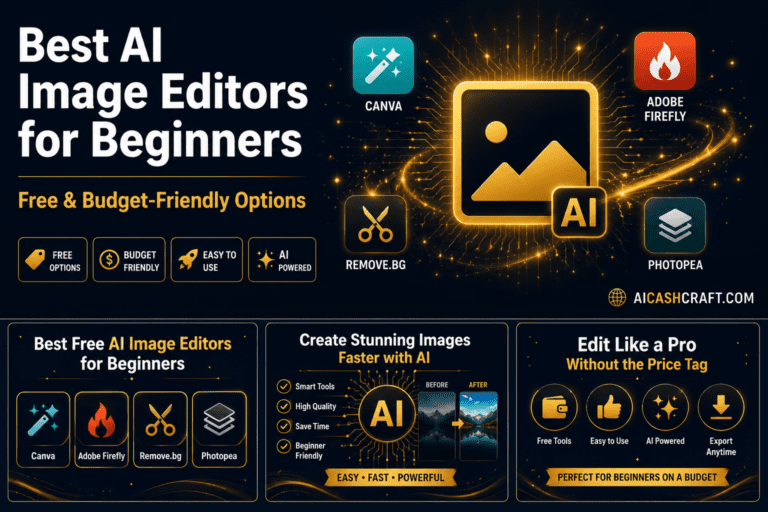
🎨 Best AI Image Editors for Beginners — Free & Budget Guide Finding the best AI image editor for beginners on a budget does not have to be complicated. The right free AI image editing tool can transform plain photos and graphics into professional-looking visuals in minutes — without design experience, expensive software, or a…
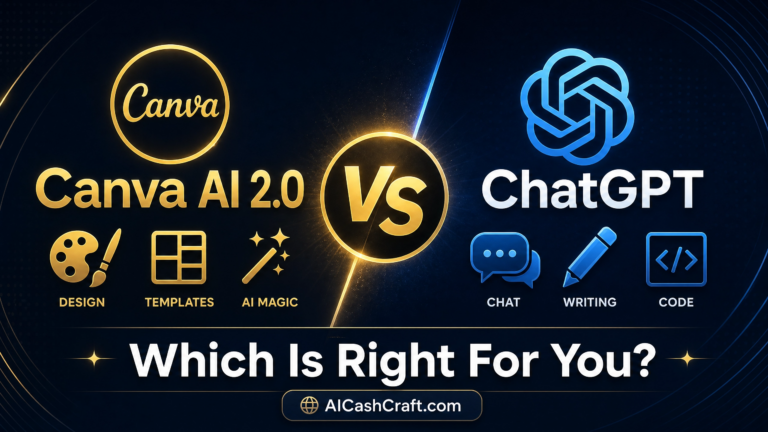
⚡ Updated May 2026 — Canva AI 2.0 + ChatGPT Images 2.0 Two of the most popular AI tools for beginners in 2026 are Canva AI and ChatGPT.But they do very different things — and choosing the wrong one can waste hours of your time. This complete guide will show you exactly which tool is…
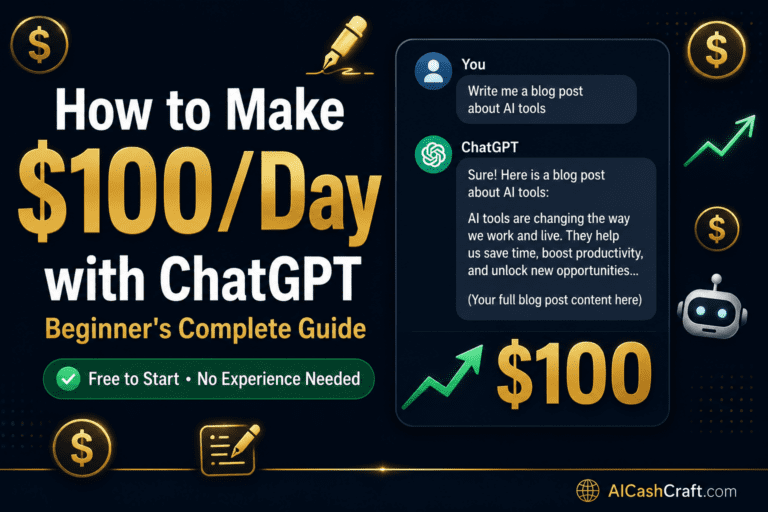
💰 How to Make $100 a Day with ChatGPT — Complete Beginner Guide Learning how to make $100 a day with ChatGPT is one of the most searched beginner income topics online — and for good reason. Thousands of beginners are already doing it with nothing but a free ChatGPT account and a laptop. This…
Artificial Intelligence has opened up new ways to earn money online. Even beginners can start small and build a steady income using AI tools and smart strategies.In this guide, we will explore the best AI side hustles for beginners in 2026. These ideas are simple, practical, and require little to no experience to get started.These…




Nice information
Great 🎉🎉